

Industrial name badges
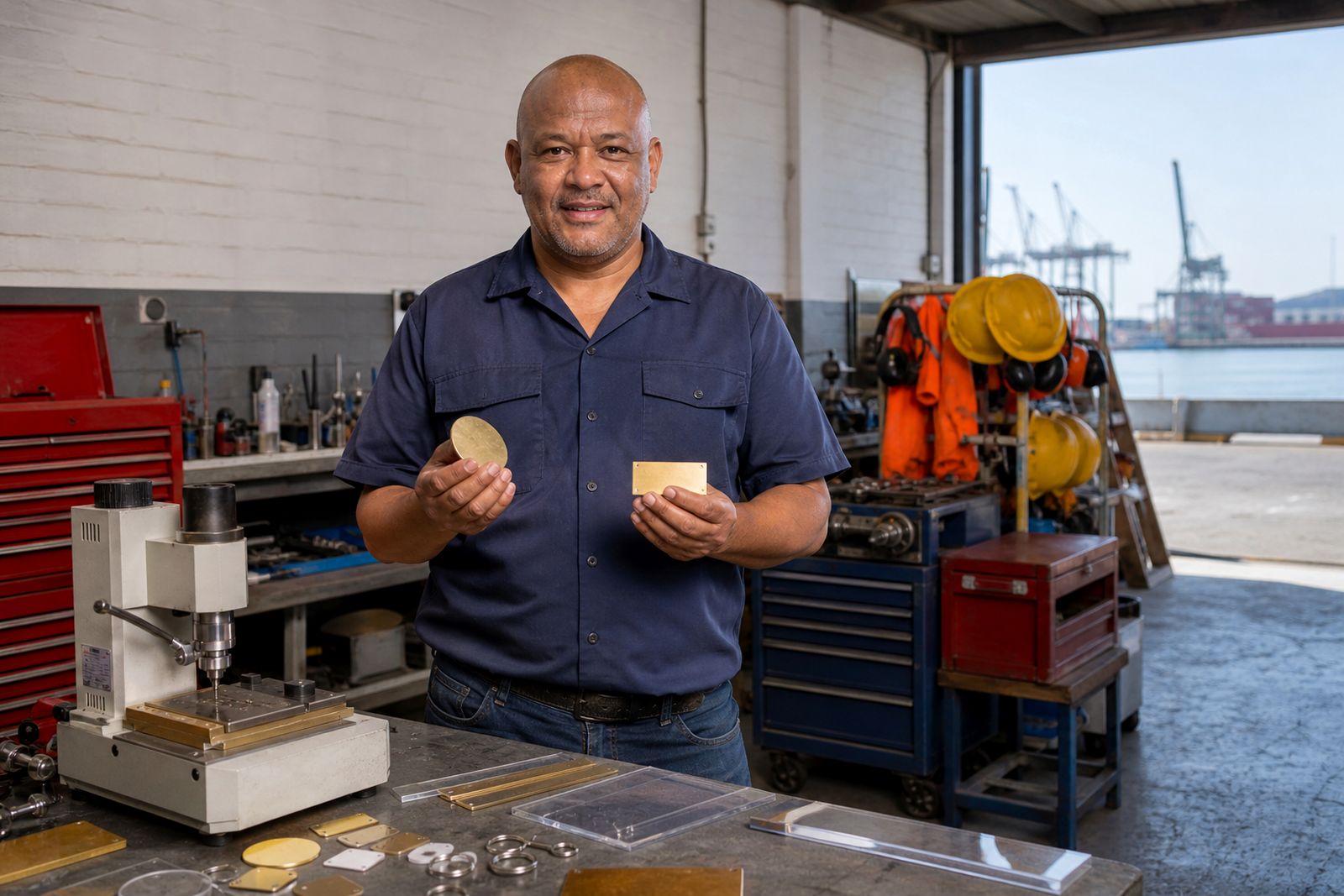
Industrial name badges are made for tougher working conditions than office badges, with practical materials and secure fittings. We supply badges for workshops, factories, warehouses, depots and plant environments across Durban, KwaZulu-Natal and South Africa.
What industrial name badges are for
Industrial name badges help identify operators, supervisors, stores staff, visitors and contractors in busy work areas where ordinary badge types do not last well. They are used in plants, fabrication shops, logistics yards, food production areas, engineering workshops, maintenance departments and receiving bays. The aim is simple: make the person easy to identify while keeping the badge readable through daily handling.
For this type of work we focus on badges that resist scratching, fading and occasional splashes better than lightweight office styles. A badge thats easy to read at a glance is usually better than one with too much decoration. Most industrial clients choose a plain layout with staff name, role or department, and a company mark if needed.
- Suitable for workshop floors, warehouses, dispatch counters and plant entrances
- Used for permanent staff, temporary staff, visitors and contractor control
- Can match internal identification systems by colour, department or access level
- Available as engraved, printed or combined badge formats depending on use
Materials, sizes and working limits
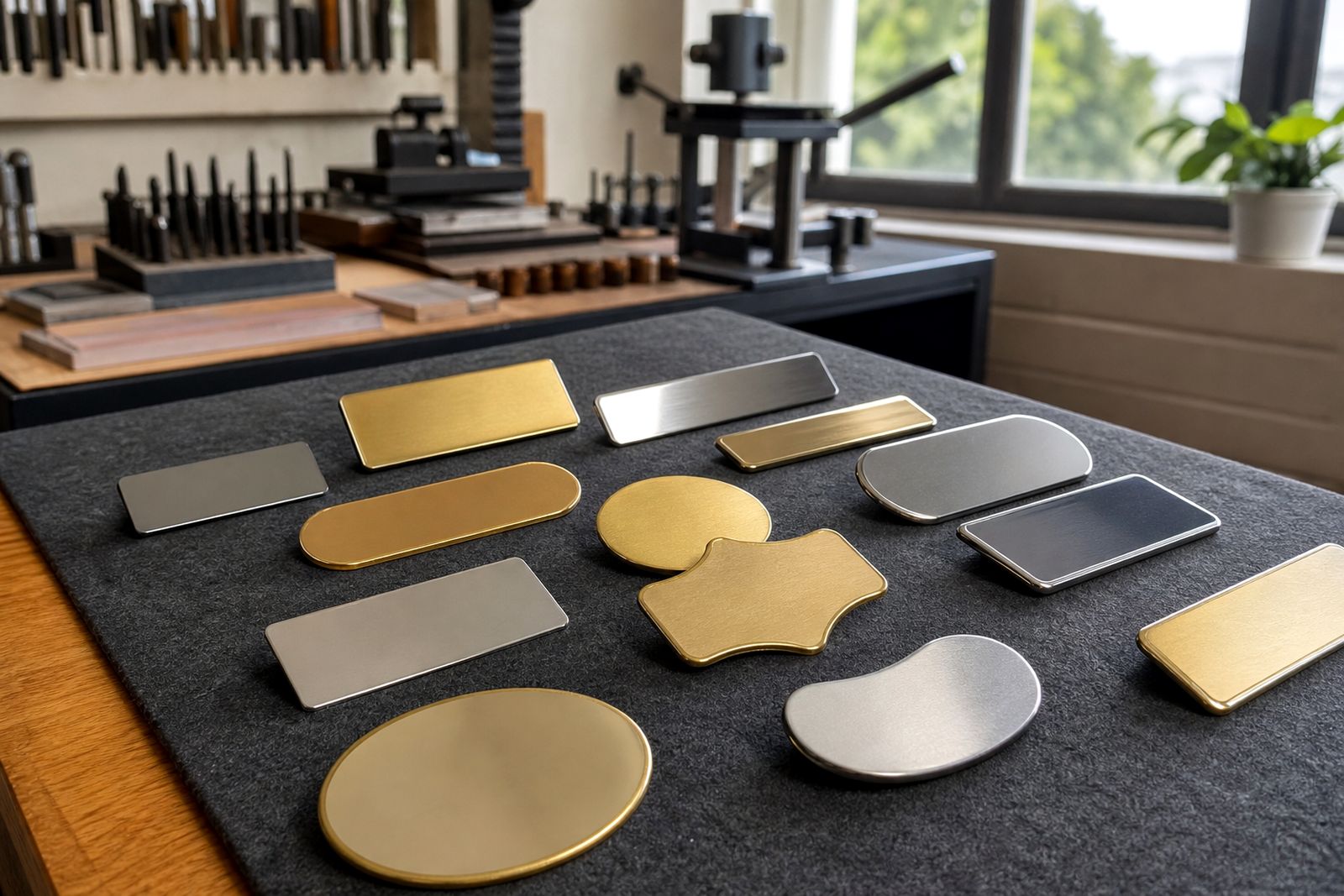
The right material depends on heat, moisture, cleaning methods and how the badge will be worn. For indoor industrial use, rigid plastic laminates and acrylics are common because they give a neat finish and clear lettering. For harder use, thicker engraved laminates are often the better choice as the lettering remains visible even if the face picks up light scratches.
Common badge sizes start around 60 x 20 mm for name-only badges and go up to about 75 x 25 mm or 80 x 30 mm where a role, department or safety colour band must be added. Larger sizes are easier to read from a short distance but can catch on clothing or harness straps if made too wide. Small badges suit shirts and overalls, while larger badges suit jackets, coats and reception control on industrial sites.
There are limits. Magnetic fittings are neat, but they are not ideal for every plant area because thick protective clothing reduces hold and some workplaces do not allow magnets near certain equipment. Pin fittings are secure but can mark garments. Clip fittings work well where badges are removed at shift end, although they can twist on lighter fabric.
- Typical thicknesses: about 1.6 mm to 3.2 mm depending on material and application
- Typical indoor use: dry workshops, stores, offices attached to plant, gatehouses
- Restricted use: very high heat zones, strong solvent washdown areas, constant outdoor UV exposure
- Best readability: dark text on a light face or light text on a dark face
Where they suit and where they do not
Industrial badges suit controlled work environments where identification must stay visible through normal shifts. They are a good choice for assembly lines, machine shops, maintenance teams, stock control, panel builders, packaging sections and service departments. In schools, hotels or front office settings, a lighter corporate badge may be more appropriate because the finish can be more decorative and the working conditions are less severe.
They are not the best option for every site. If staff work in foundry heat, around open flame, in aggressive chemical areas, or in washdown spaces with repeated caustic cleaning, a standard plastic name badge may not last as expected. In those cases we will advise on simpler engraved formats, heavier fixing methods or whether another identification item would make more sense. It is better to be clear about the environment at enquiry stage than to order a style that looks good but fails too soon.
Fixings, clothing and site requirements
How the badge is attached matters as much as the face material. Overalls, reflective jackets, dust coats and freezer wear all behave differently. If a badge is worn on thick clothing, magnetic fittings often need testing first. If garments are washed in bulk, removable badges are normally better than permanent attachment. On some industrial sites contractor badges are issued daily, so clip or pin options can be easier to manage.
Please also consider your site rules. Some plants require colour coding by trade or area. Others need a photo holder, visitor numbering or a larger line of text for quick checks at access points. If your staff move between air-conditioned offices and humid loading areas in Durban, tell us that too, because condensation and frequent handling affect finish choice.
- Pin fittings for secure hold on overalls and jackets
- Magnetic fittings for neat wear on shirts and lighter garments where allowed
- Clip options for temporary issue, visitors or shift-based use
- Colour bands for department, contractor class or safety grouping
Care, cleaning and service life
Industrial badges last longer when they are cleaned gently and stored properly after shift use. Dust, metal fines and oily fingerprints can dull the face over time. Wipe with a soft damp cloth and mild soap where needed. Avoid abrasive pads, strong thinners and harsh cleaners because these can cloud clear surfaces, lift print or damage adhesive parts on some fittings.
Badges kept in loose bins with tools or keys usually scratch faster. If the badge is removed each day, a small tray or divided storage box helps. Coastal humidity in Durban can also affect metal fittings over time, so dry storage is sensible especially for badges used near wash areas or open roller doors. A little care goes a long way, and replacement orders are easier when the original layout and sizes have stayed consistent.
What to tell us when you enquire
To quote and advise properly, we need the working details not just the quantity. Tell us where the badges will be used, who will wear them and whether they are for permanent staff, contractors or visitors. If you already use badge colours by department, mention that from the start. Where a plant has strict induction rules we can work around the format required, but we need the full brief.
Useful artwork can be supplied if you have it, but a simple typed list is often enough for repeat industrial work. If names change often, say so. We can then suggest a more practical format for updates rather than something thats awkward to replace one by one.
- Number of badges required
- Badge size needed, or tell us the garment and reading distance
- Names, roles, departments and any numbering sequence
- Preferred fixing method such as pin, magnet or clip
- Indoor or outdoor use, heat, moisture, dust or chemical exposure
- Any site rules for colours, contractor marking or visitor control
What our badge and sign customers say
Verified Google reviews
Questions we get asked
Can industrial name badges include job title or department?
Yes. Most industrial badges can include the staff name, role, department, numbering and a simple company mark. Clear layouts usually work best in plant conditions.
Are magnetic badges suitable for factory clothing?
Sometimes. They work well on lighter garments where magnets are allowed, but heavy overalls, freezer wear or certain site rules may make pin or clip fittings a better option.
Do you supply industrial badges outside Durban?
Yes. We are based in Durban and supply throughout KwaZulu-Natal and across South Africa. Send your requirements through the enquiry form on the contact page.
Also worth a look

Ask for a quote
Send a note through the contact form with the items you need, the finish or material you prefer and your town, and Ken Bond will reply with a quote.
Open the contact form