Medical and healthcare name badges
Patients want to know who is treating them, and staff need a badge that survives a long shift, regular cleaning and close contact. We make name badges for clinics, practices, pharmacies, care homes and hospital support teams across Durban, KwaZulu-Natal and the rest of South Africa.
Why healthcare badges need extra thought
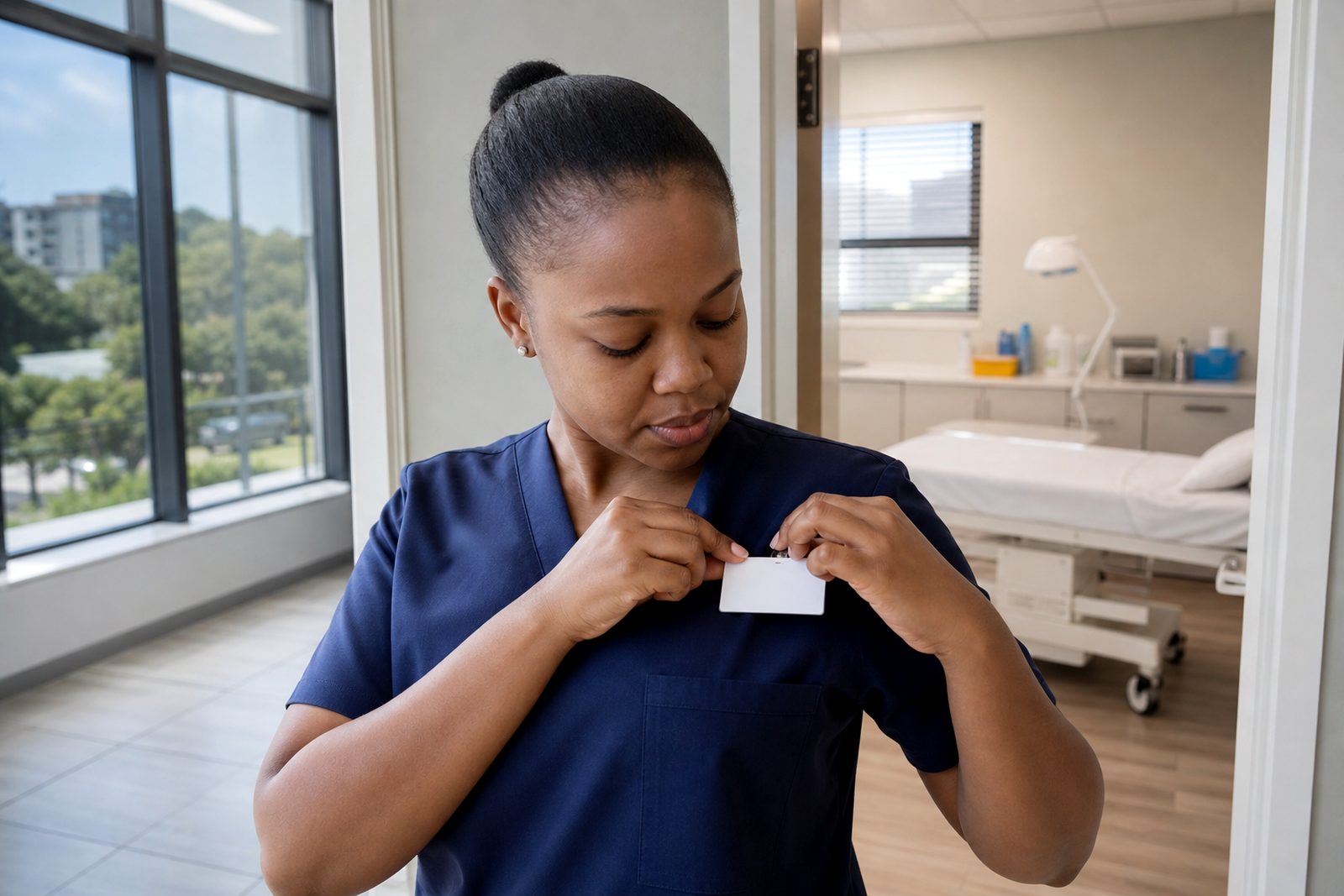
In a clinic or ward, a name badge does more than look neat. Patients and visitors use it to tell a nurse from a receptionist, or a doctor from a student, often while they are anxious or unwell. The name and role need to be clear at a glance from about one metre, without the reader having to lean in.
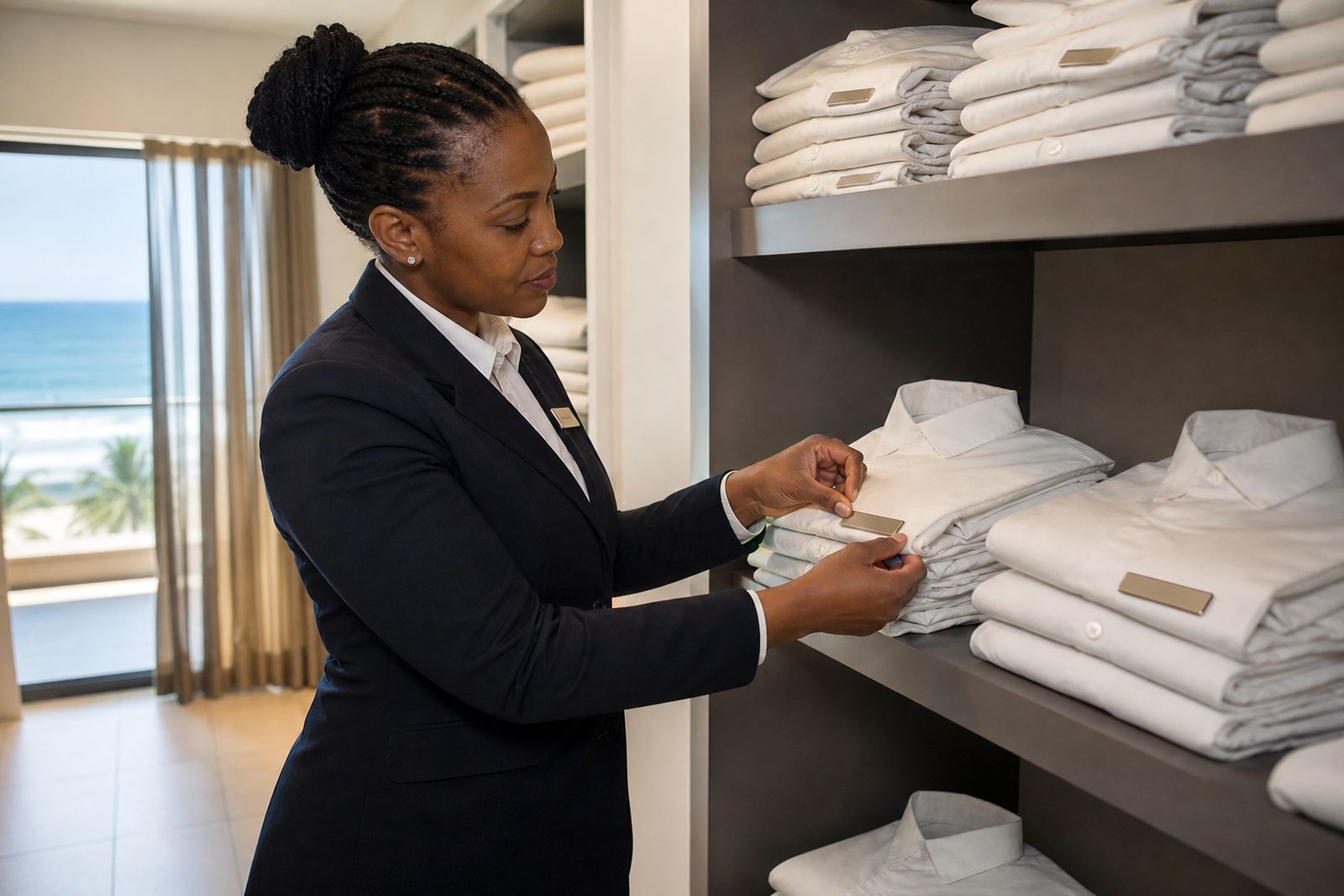
Healthcare staff also handle their badges more than most. Badges are wiped down, bumped against beds and trolleys, and moved between scrubs, tunics and lab coats. A badge that suits a bank teller may not last a month on a ward, so the material, edge finish and fitting all matter.
Who orders them
Most medical badge orders come from practice managers, nursing managers and HR teams who want one standard across a site or group. Common users include:
- General practices, dental and specialist rooms
- Day clinics, physiotherapy and rehabilitation practices
- Pharmacies and dispensary staff
- Care homes, frail care and retirement village staff
- Hospital admin, porter, catering and cleaning teams
- Veterinary practices and animal clinics
Many sites use colour to separate roles, for example one badge colour for clinical staff and another for admin or support teams. That only works if everyone knows the system, so keep it simple and use the same colours at every branch.
Layout: name, role and nothing extra
The most useful healthcare badge carries a first name in large letters, a title or role underneath, and a small logo. Patients rarely need a surname, and leaving it off can help with staff privacy. Qualifications and long department names make the text smaller and harder to read, so we usually suggest a short role such as Registered Nurse, Pharmacist or Reception.
Plain, bold lettering with strong contrast reads best under clinic lighting. Dark text on a white or pale badge is the safest choice. If your brand colours are light, use them as a border or a small logo panel rather than behind the name.
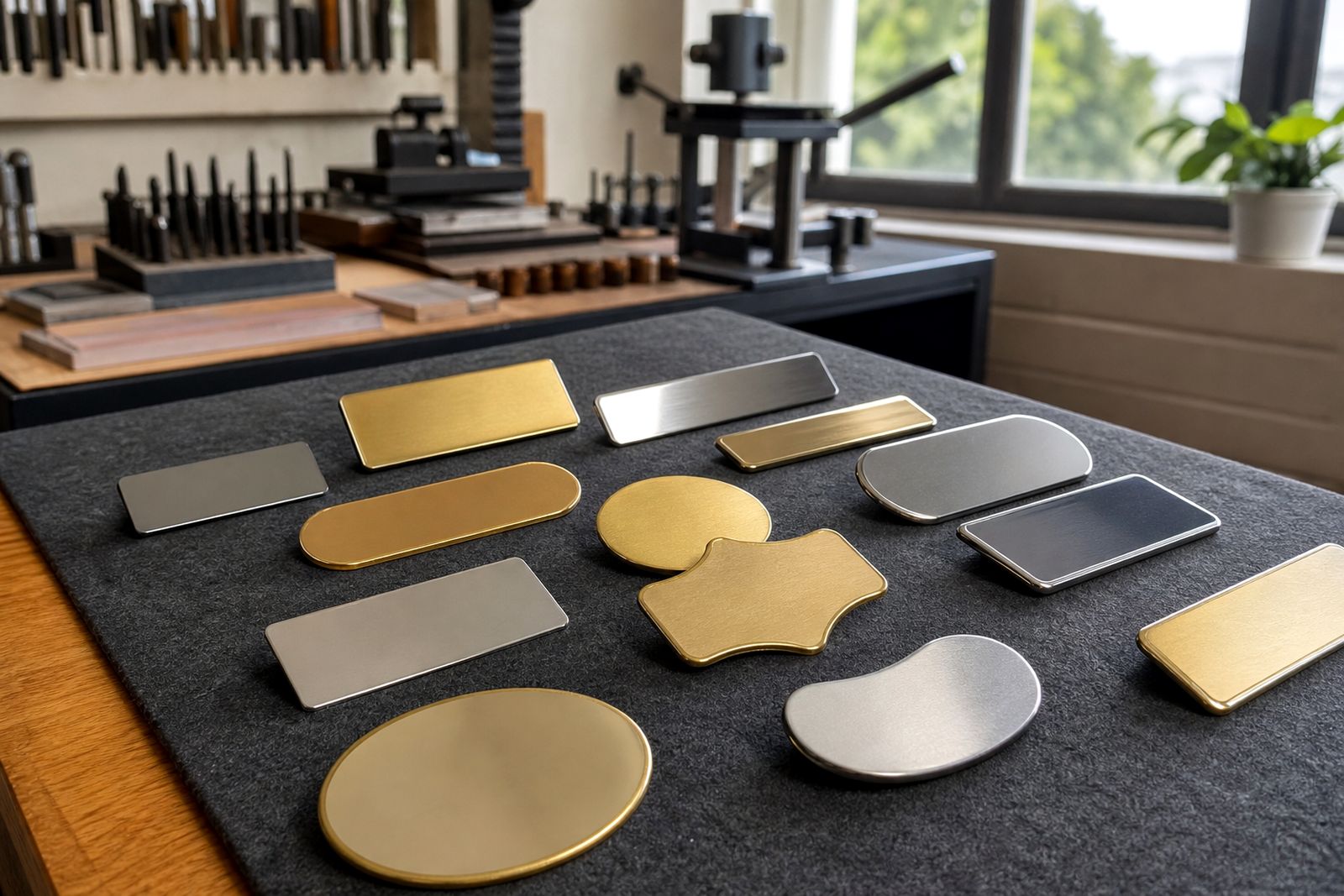
- Common sizes: 65 x 25 mm or 75 x 25 mm for one name and one role
- 80 x 30 mm for longer roles or two languages
- Round edges and corners so the badge does not catch on gloves or gowns
- Optional role colour bands for clinical and support staff
Materials that handle cleaning
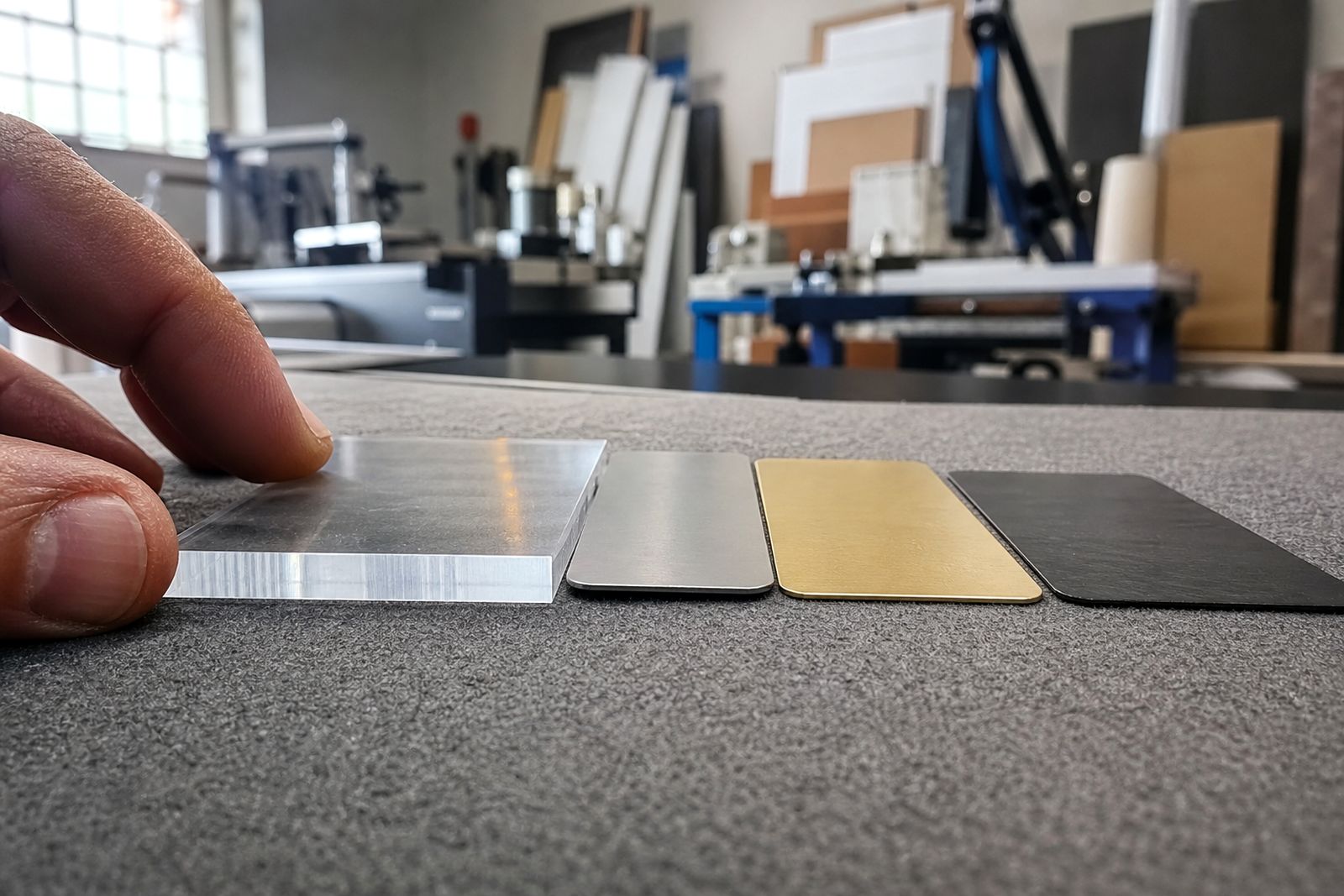
Engraved laminate and printed badges with a sealed face both stand up well to wiping. The surface should be smooth with no deep grooves where dirt can collect. Domed resin badges are also easy to wipe and feel soft to the touch, which suits paediatric and care settings.
Ask your infection control lead which cleaning products are used on site. Mild detergent and alcohol wipes are fine for most badge faces, but strong solvents can dull some finishes over time. If badges will be cleaned many times a day, tell us at enquiry stage so we can suggest the toughest face for the job.
Fittings for scrubs, tunics and coats
Fittings are where healthcare badges differ most from office badges. Pins can tear thin scrub fabric and are not ideal near patients. Magnetic fittings sit cleanly, but they are not suitable for staff who have a pacemaker or another implanted medical device, and some sites restrict magnets near MRI areas. Clip fittings and lanyard holders are good alternatives.
Some practices issue each staff member two badges, one with a magnet for tunics and one with a clip for coats, so nobody moves a badge between garments mid-shift.
What to send when you enquire
A short list is enough to start. If you are unsure about size or fitting, describe the uniform and the type of practice and we will suggest options.
- Staff names and roles, checked for spelling
- Logo artwork and any role colours you want to use
- Preferred size and fitting, or the type of uniform worn
- Whether any staff cannot use magnets
- Likely repeat orders for new staff
What our badge and sign customers say
Verified Google reviews
Questions we get asked
Can medical badges be cleaned with alcohol wipes?
Most sealed badge faces handle alcohol wipes and mild detergent well. Strong solvents can dull some finishes, so tell us what your site uses and we will suggest a suitable material.
Should healthcare badges show a surname?
It is up to your practice. Many sites use first name and role only, which is easier for patients to read and helps with staff privacy.
Are magnetic fittings safe for all staff?
No. Staff with a pacemaker or another implanted medical device should not wear magnetic badges, and some sites restrict magnets near imaging rooms. Clip and pin fittings are available instead.
Also worth a look
Ask for a quote
Send a note through the contact form with the items you need, the finish or material you prefer and your town, and Ken Bond will reply with a quote.
Open the contact form