

Choosing badge materials
The right badge material depends on where the badge will be worn, how often it is handled and what image your organisation wants to present. This guide compares common options, finishes and fittings so you can order badges that last and still look neat after daily use.
Start with where the badge will be used
Before choosing colour, shape or printing style, look at the working environment. A badge used at a school reception, church welcome team or bank counter has different demands from one worn in a kitchen, workshop or warehouse. Durban humidity, frequent cleaning and daily pinning on and off clothing all affect lifespan.
For indoor office and front-of-house use, appearance usually comes first, with a clean finish and easy-to-read names. For industrial and hospitality settings, resistance to scuffs, moisture and repeated handling matters more. If the badge will be worn every day on a uniform that goes through regular washing or dry cleaning nearby, pick a material and fitting that can cope with that routine.
- Low handling: reception, admin offices, school front office, church ushers.
- Medium handling: retail counters, restaurant floor staff, hotel housekeeping supervisors.
- Heavy handling: kitchens, factories, maintenance teams, delivery areas and stores.
- Outdoor exposure: security posts, grounds staff, parking teams and site staff.
A quick site list helps avoid ordering a polished badge for a rough-use area where it will scratch within weeks.
Common badge materials and what they suit
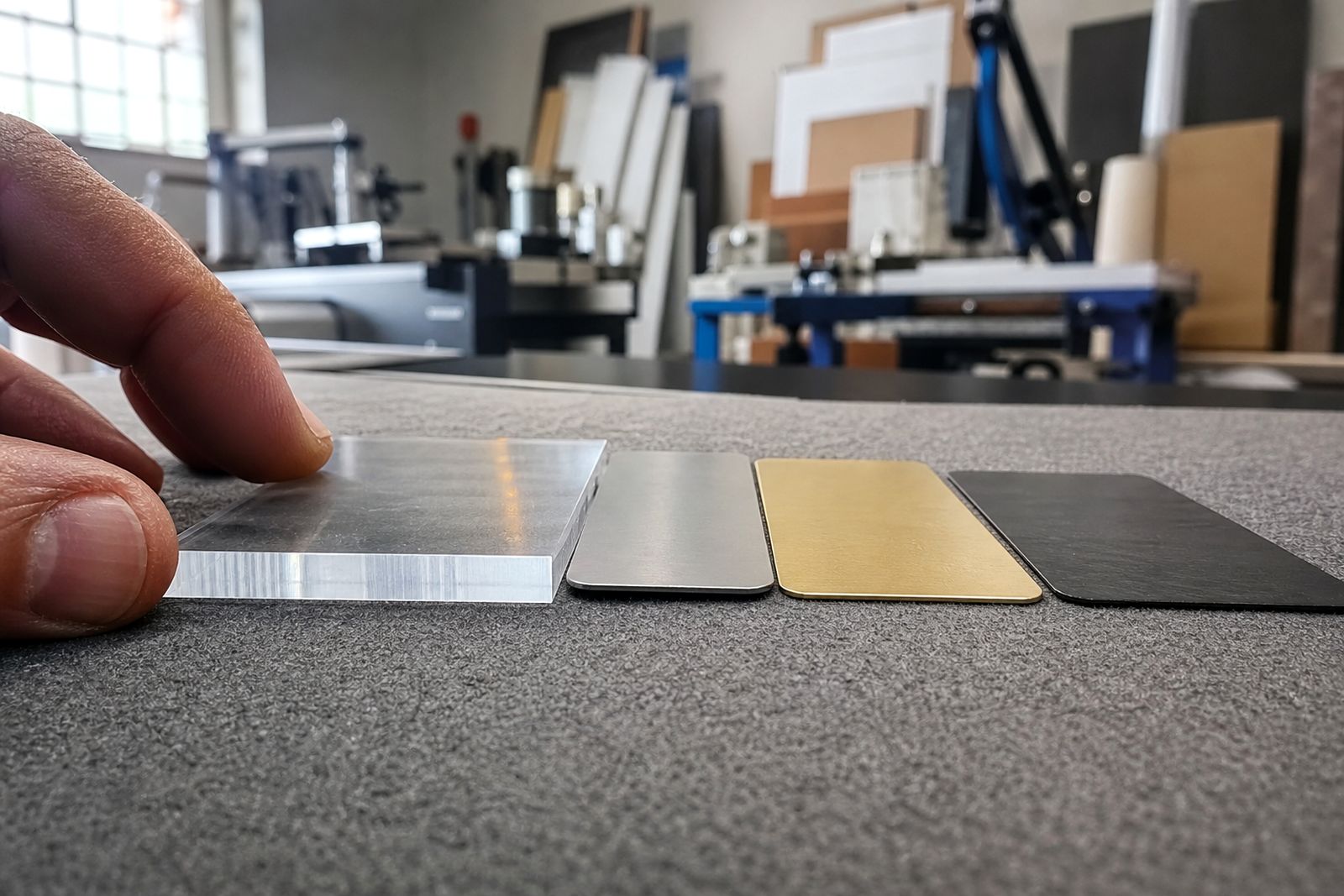
Most organisations choose between plastic laminate, engraved plastic, acrylic and metal-look badge stock. Each has a place. Plastic laminate is a practical all-round option for schools, churches and offices. It is light, neat and available in a wide range of colours. Engraved plastic works well where clear contrast is needed, such as white-on-black or black-on-silver text for names and titles.
Acrylic can give a sharper modern look for reception and corporate use, especially where logos and full-colour inserts are needed. Metal-look materials suit banks, hotels and formal settings where a more premium appearance is wanted without unnecessary weight. For harsher areas, simpler engraved materials often last better than glossy decorative faces, because scratches show less.
- Plastic laminate: economical, lightweight, good for larger runs.
- Engraved plastic: clear lettering, dependable for daily staff use.
- Acrylic: crisp finish, suitable for logo work and smart presentation.
- Metal-look stock: formal appearance for front-facing staff and management.
If your team includes both front office and back-of-house staff, it may help to split the order into two material types rather than forcing one style onto all roles.
Choose a finish that still looks good after months of wear
Finish affects both appearance and maintenance. Gloss surfaces can look bright and clean when new, but they show fingerprints and fine scratches sooner. Matte or satin finishes hide handling marks better and are usually easier for everyday wear. In coastal areas around Durban and the wider KwaZulu-Natal coast, a finish that copes with moisture and regular wiping is often the safer choice.
Dark backgrounds with light text usually stay readable for longer than pale colours with fine lettering. If the badge includes a logo, make sure the logo colours still stand out against the badge face. Thin script fonts may look tidy on a proof but become harder to read from a few metres away. A plain typeface with enough contrast is normally the better option.
For teams working shifts, badges should also remain legible under indoor lighting, entrance canopies and parking area lights. A very reflective surface can create glare, while a softer finish keeps names visible. This small detail is often missed on first orders, but it matters a lot in practice.
Attachment options: pin, magnet or clip
The fitting on the back is as important as the front. A good-looking badge with the wrong attachment quickly becomes a daily irritation. Pins are common and secure, especially on heavier fabrics such as jackets, blazers and tunics. They do however put a hole through the garment. Magnets avoid pin holes and are popular for corporate wear, hotel uniforms and knitwear, but they need enough fabric thickness to grip properly.
Clips are useful where staff remove badges often during shift changes or laundering, though they can move around more on lightweight garments. For active work, especially in hospitality and industrial settings, ask for a fitting that sits flat and does not catch easily.
- Pin fitting: secure, simple and suitable for heavier uniforms.
- Magnet fitting: neat on formal wear, no pin holes in shirts or jackets.
- Clip fitting: quick to remove, handy for temporary or visitor use.
If you are ordering for mixed uniforms, mention that in your enquiry. One department may need magnets while another needs pins, and it is better to sort that out before production starts.
A simple checklist before you place the order
A clear brief saves time and reduces remakes. Start by grouping badges by department, role or site. Then confirm the exact spelling of each name and job title. If logos are included, use a clean approved version and note whether colour matching matters for your organisation. Keep layouts consistent across the set so the badges look like part of one system.
- List each badge name exactly as it must appear.
- Confirm title lines such as teacher, supervisor, manager or volunteer.
- State the working environment: office, school, church, hotel, kitchen or factory.
- Choose one or two fitting types only where possible.
- Note whether badges must match existing signs or room labels.
- Ask for advice if you are unsure about size or contrast.
It also helps to think about replacements. Staff changes, new starters and role changes are common, so choose a style that can be repeated later without looking mismatched. A practical badge system is easier to maintain than a very specialised one. Keep a copy of your final badge list for re-orders, it saves admin later.
When to ask for a sample or guidance
If this is your first badge order, or if you are changing from one style to another, ask for guidance before confirming the full run. A school may want one style for prefects and another for staff. A hotel may need different colours for front office, housekeeping and food service. An industrial site may need larger text for visibility and a tougher material for long shifts.
Samples are especially useful when choosing between a gloss and matte face, or between pin and magnet fittings. What looks fine on paper may feel too heavy, too small or too reflective in use. For organisations with several branches across South Africa, it is worth agreeing one standard badge format so future orders stay consistent.
If you are not sure where to start, send your use case through the enquiry form on the contact page. We can help narrow the choice to a badge material, finish and fitting that suits the job without overcomplicating the order.
What our badge and sign customers say
Verified Google reviews
Questions we get asked
Which badge material is best for daily staff use?
For most daily staff wear, engraved plastic or plastic laminate is a solid choice. It is lightweight, readable and practical for offices, schools, churches and general business use.
Are magnetic badges better than pin badges?
Magnetic badges are better when you want to avoid pin holes in clothing, especially on formal uniforms. Pin badges are often the better choice for heavier garments and active working environments.
Can one organisation order different badge types for different departments?
Yes. Many organisations use one style for front-facing staff and another for tougher working areas. That keeps the look suitable for each role while still maintaining a consistent identity.

Ask for a quote
Send a note through the contact form with the items you need, the finish or material you prefer and your town, and Ken Bond will reply with a quote.
Open the contact form