

Folded counter and table signs
Folded counter and table signs are freestanding display pieces made for reception points, service counters and tables where clear identification matters. We manufacture practical custom signs in Durban for organisations across KwaZulu-Natal and wider South Africa.
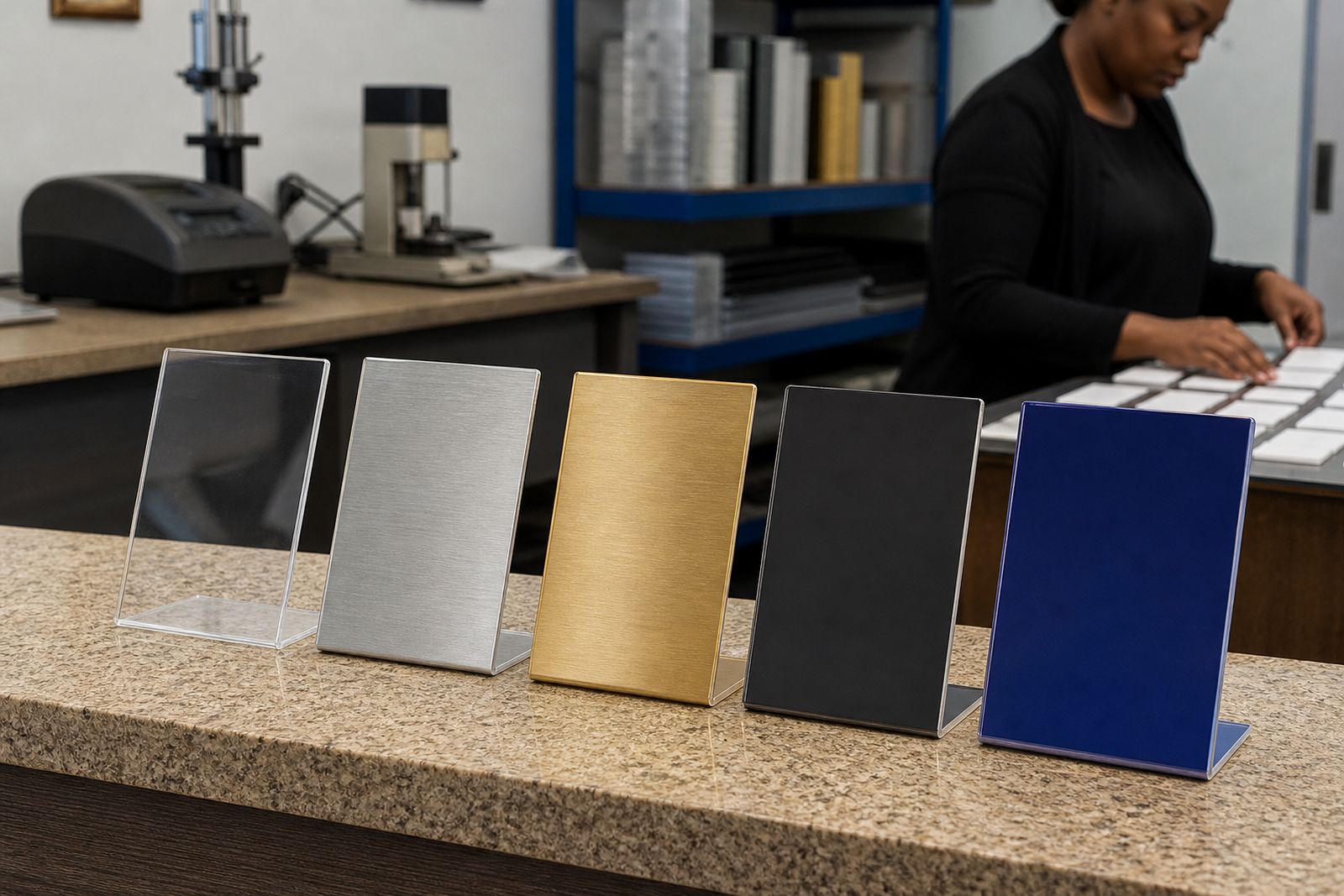
What folded counter and table signs are
A folded counter or table sign is a rigid sign panel formed so it stands on its own without wall fixing. These are commonly used for reception areas, meeting rooms, restaurant table numbering, reserved seating, counter notices, department labels and short directional messages. Because the sign is freestanding, it can be moved when a room layout changes or when a venue is reset for a new function.
We make these signs to order with wording, numbering or branding to suit the site. They are a good choice where drilling into walls, counters or joinery is not wanted, or where the sign needs to be lifted away for cleaning. In busy Durban front-of-house areas this helps keep the sign practical and easy to replace if details change later.
- Freestanding format with no wall mounting
- Used on counters, reception points, tables and shelves
- Suitable for names, numbers, instructions and branding
- Made for indoor use in offices, schools, churches, hotels and restaurants
Sizes, formats and working limits
Most folded signs are made from engraved laminate or similar rigid sign material that holds a neat fold and stands square on a flat surface. Common formats include tent style signs with two reading faces, and single reading folded signs where one face is the main message. Size depends on viewing distance, wording length and how much table or counter space is available.
For close reading at arm's length, compact signs work well. For a reception point where people stand back a little, a larger face is usually better. Very long messages are not ideal on this product because readable letter height becomes too small, and oversized panels can become unstable if the base is too narrow. If the sign will be handled often, we normally suggest a simpler layout with clear lettering rather than crowded logos and long text. A sign can look neat on paper but too busy on the actual counter.
- Typical face widths from about 100 mm to 250 mm
- Typical face heights from about 50 mm to 120 mm
- Best for short messages, room names, surnames, titles and numbers
- Not suited to long policy notices or outdoor site information
- Best read from close range, usually within a few metres
Where these signs suit best
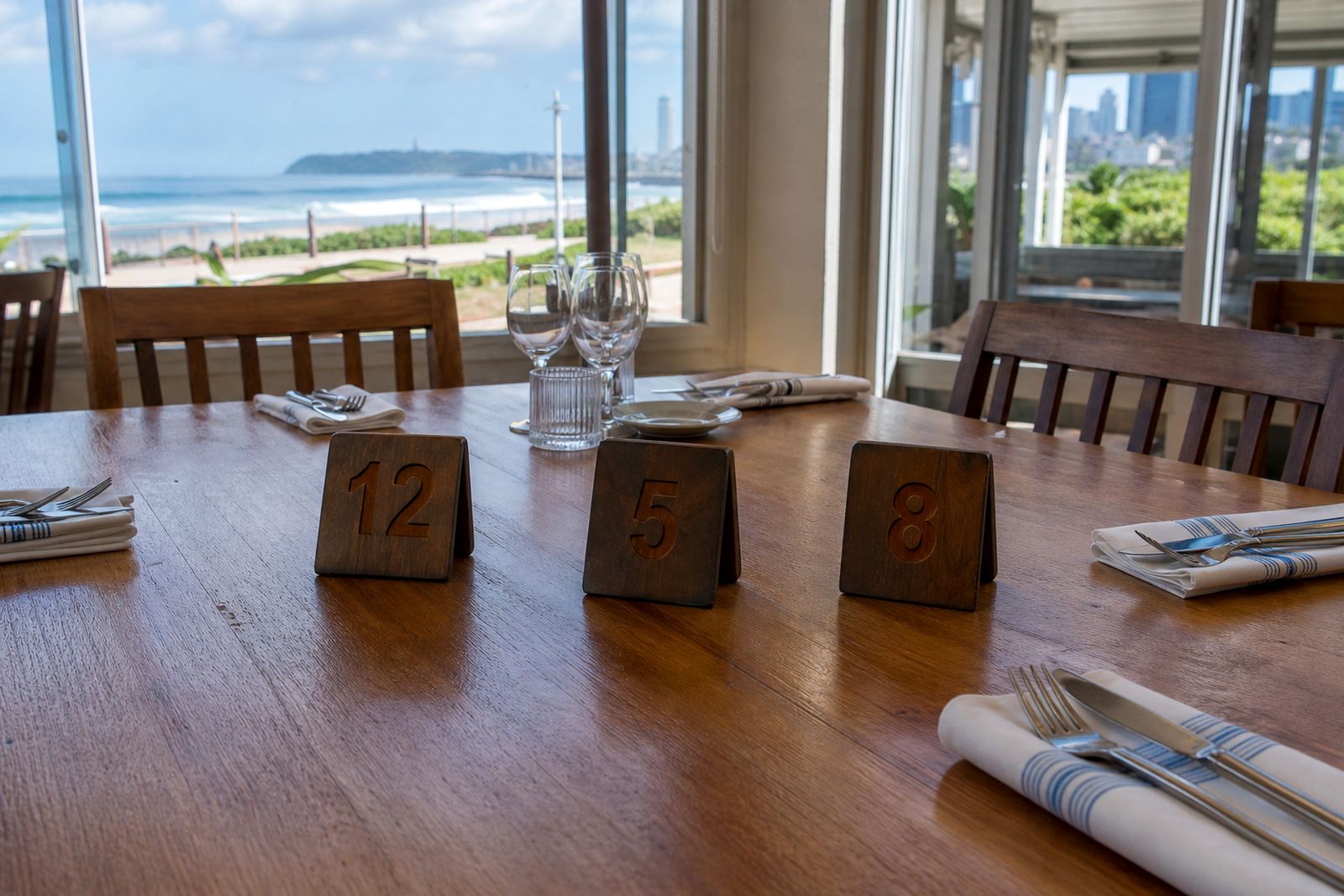
Folded counter and table signs suit places where people need quick identification without searching around the room. Reception areas use them for visitor check-in points, department names and collection counters. Restaurants and event venues use them for table numbers, reserved signs and buffet labels. Schools and colleges use them for admissions, staff counters and exam room support items. Churches often use them for welcome areas, donation counters and event registration tables.
They also work well in banks, offices, clinics and training rooms where a movable sign is handier than a fixed wall plate. If your site has regular room changes, temporary campaigns or shared spaces, a freestanding sign saves time because it can be set out when needed and packed away after use.
They do not suit exposed outdoor positions, windy entrances or areas where cleaning crews hose down floors and counters. In industrial sites with vibration, forklifts or rough handling, a fixed plaque or door sign is often the better option. For humid coastal conditions near the sea, indoor use is still fine, but direct weather and constant wetting are not.
Site needs and practical use
These signs need a level, stable surface. Uneven timber, cloth-covered trestles or slippery polished stone can affect how well the sign stands, so tell us what surface it will sit on. If the sign is for a narrow service ledge, we need to know the usable depth before manufacture. This avoids a sign that overhangs the edge or gets knocked by paperwork and card machines.
Lighting matters too. A sign placed under bright downlights, or behind glass at a recpetion point, may need stronger contrast so the message stays easy to read. In venues affected by power cuts, clear engraved wording is useful because it remains legible without a backlit screen. If staff wipe counters with strong cleaning chemicals every day, ask us about the most suitable material and finish.
- Flat surface with enough depth for the base
- Indoor position away from rain and direct spray
- Clear line of sight from the normal standing position
- Reasonable housekeeping so the sign is not buried behind forms or displays
- Protection from frequent knocks if used in queueing areas
Care and expected service life
Routine care is straightforward. Wipe the sign with a soft damp cloth and mild soap if needed. Avoid abrasive pads, strong solvents and scraping with blades, as these can mark the face or dull the edges. If the sign is moved between functions, store it flat or upright in a carton so the corners do not chip. For venues with a lot of public handling, it helps to keep a spare set of high-use numbers or labels on hand.
Service life depends on where and how the sign is used. In an office or school admin area, a folded sign usually gives long indoor service with very little attention. In restaurants, conference venues or hospitality counters where signs are moved and cleaned often, some wear is normal over time. If names, numbers or departments change regularly, tell us that from the start so we can suggest a format that is easier to reorder in matching batches.
What to send when you enquire
To quote correctly, we need the basic job information up front. A short list is enough and helps us avoid back and forth. If you have several signs, send the wording in a typed list rather than photos of handwritten notes. That reduces spelling errors and keeps numbering in order.
- Quantity needed
- Exact wording, numbering or both
- Approximate sign size wanted, or available counter depth
- Single-sided reading face or double reading tent style
- Material preference if known, otherwise tell us how and where it will be used
- Any logo artwork and whether it must match existing signs on site
- Town for delivery in Durban, KwaZulu-Natal or elsewhere in South Africa
If the signs must match existing plaques, door names or table numbers, mention that in your enquiry. A quick photo of the current item is useful for reference, even if you want a cleaner updated version. Clients reach us through the enquiry form on the contact page, and we will advise on a suitable layout and build method from there.
What our badge and sign customers say
Verified Google reviews
Questions we get asked
Can folded counter signs be used outside?
They are best kept indoors. A sheltered foyer may be fine for short periods, but rain, wind and constant damp can shorten service life and make a freestanding sign unstable.
Are these suitable for restaurant table numbers?
Yes. They are commonly used for table numbers, reserved markers and function tables, especially where the layout changes and the signs must be moved easily.
What is the main difference between a folded sign and a wall plaque?
A folded sign stands on a counter or table and can be moved at any time. A plaque is fixed to a wall, door or panel and is better where a permanent position is needed.
Also worth a look
Ask for a quote
Send a note through the contact form with the items you need, the finish or material you prefer and your town, and Ken Bond will reply with a quote.
Open the contact form