

Stickers
We make custom stickers and adhesive labels for everyday marking, branding and identification. Supply is from Durban to clients across KwaZulu-Natal and wider South Africa, with practical options for offices, schools, hospitality and industry.
What Our Stickers Are Used For
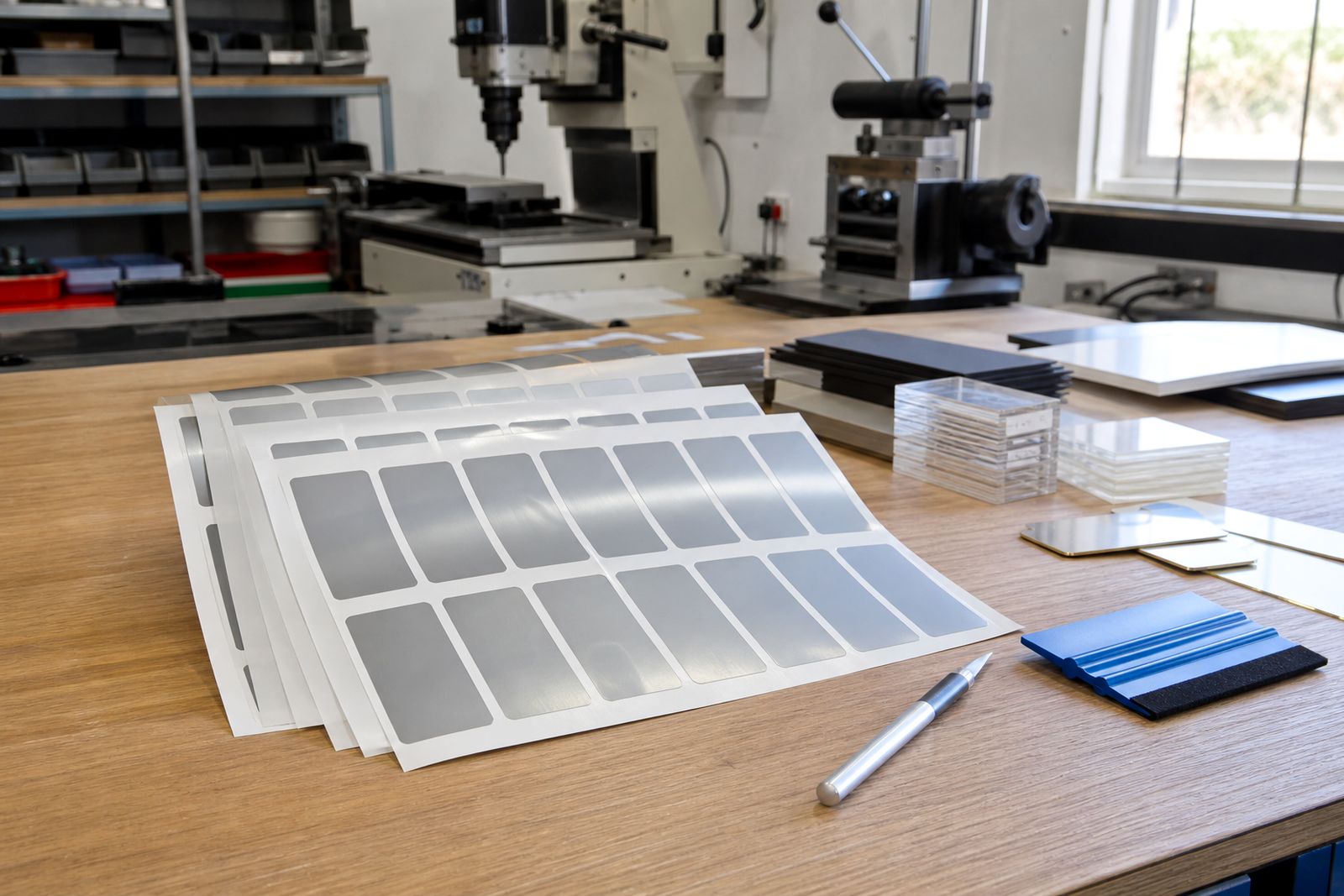
Our sticker range covers practical adhesive labels made to order for organisations that need clear marking on site. Typical jobs include asset labels, room or area labels, branding decals, warning labels, instruction labels, product identification and short-run promotional stickers. We supply work for schools, hotels, banks, churches, restaurants, workshops and general offices across Durban and KwaZulu-Natal.
These products suit flat, reasonably smooth surfaces where a clean applied label is the simplest option. They are useful when you need a neat branded finish without drilling, screws or separate sign fixings. For many indoor jobs a sticker is quicker to fit and easier to replace when names, room uses or stock details change.
- Asset and stock marking for shelves, bins and filing areas
- Branding labels for windows, counters, packaging and presentation items
- Instruction and caution labels for equipment and control panels
- Room, locker and storage identification in schools and offices
- Short-run labels for events, hospitality and church use
Sizes, Shapes and Material Options
We cut stickers to suit the application rather than forcing one standard size onto every order. Small labels can be used for keys, stock items or serial references, while larger decals are common for windows, doors, machine covers and information panels. Shapes can be square, rectangular, round, oval or contour cut around a logo or symbol.
Material choice depends on where the sticker will be used. Indoor labels for clean office areas may only need a standard self-adhesive face stock. For kitchens, workshops, coastal humidity or regular wipe-down cleaning, a tougher film with stronger adhesive is usually the better option. If a label will sit in direct sun or near exterior doors, tell us upfront so we can guide you on a more suitable spec.
- Small labels from about 20 x 20 mm for item marking
- General purpose labels in common sizes such as 50 x 20 mm, 75 x 25 mm and 100 x 50 mm
- Larger decals for glass, doors or equipment panels up to sheet-based production limits
- Single colour or full colour print depending on artwork and quantity
- Permanent adhesive as the normal choice, with removable options for selected short-term jobs
Very fine text on very small labels can become hard to read, so we may suggest a slightly larger size or simpler layout. That usually gives a better result and fewer fitting problems later.
Where Stickers Work Well and Where They Do Not
Stickers work well on smooth painted metal, sealed wood, melamine, glass, acrylic, powder-coated panels and many clean plastic surfaces. They are a good fit for internal doors, cupboards, storage tubs, dispensers, mirrors, appliance panels and reception or counter areas. In hospitality settings they are often used for room information, back-of-house marking and temporary menu or service point identification.
They are not always the best answer for every site. Rough brick, dusty walls, damp plaster, flaky paint, textured powder coating and oily workshop surfaces can shorten adhesive life. Outdoor use near the coast can also be harder on labels because of sun, salt air and repeated washing. For permanent external marking, a plaque or rigid sign may be the better route.
- Best on clean, dry, smooth surfaces
- Less suitable on rough, chalky or porous walls
- Not ideal where labels will be scraped often by pallets, trolleys or tools
- May fail early on hot engine parts or surfaces with constant chemical exposure
- For municipal or safety compliance signs, check whether a rigid sign format is required
Installation and Site Preparation
Most sticker jobs are supplied ready for site fitting by your maintenance team, facilities staff or installer. Good preparation matters. The surface should be clean, dry and free from polish, dust, silicone, grease and loose paint. On glass and smooth panels, a careful dry application is usually the neatest method for smaller pieces. Larger decals may need alignment marks and a steady hand to avoid trapped air.
If your site has frequent power cuts and low light in passages or plant rooms, it helps to schedule fitting during brighter hours so labels are positioned correctly first time. Newly painted surfaces should be fully cured before any adhesive product is applied. In coastal areas around Durban, wipe away condensation or salt residue before fitting or the bond can be weaker than expected.
Where many labels must line up across a bank of doors or lockers, send us a simple schedule or marked-up photo. That makes production and installation planning easier and helps avoid mix-ups.
Cleaning, Handling and Service Life
Adhesive labels last best when they are cleaned with a soft cloth and mild cleaner. Harsh solvents, abrasive pads and high-pressure washing can lift edges or dull the print. In schools, kitchens and industrial sites where regular wipe-downs are expected, we can suggest a material and finish that handles more routine cleaning.
Expected life depends on the substrate, sunlight, heat, moisture and how the item is handled. An indoor locker label in a dry office will generally have an easier life than a label on an exterior gate motor cover or workshop machine. If a sticker is meant to be temporary, say so at enquiry stage. We can then look at an adhesive that removes more cleanly, though no removable label is guaranteed on every painted surface.
- Clean with a soft cloth and mild non-abrasive cleaner
- Avoid scraping edges with blades or metal tools
- Do not apply onto fresh paint before curing
- Store unused labels flat in a cool dry place
- Test one label first when the surface type is uncertain
What To Send With Your Enquiry
To quote correctly we need the practical details, not just the wording. Start with the intended use, the surface the sticker must bond to, and whether it is for indoors or outdoors. If the label must match an existing sign set, include a clear photo and the approximate size. Artwork can be supplied as a print-ready file, but if you only have a scan or phone image send that and we will advise what can be used.
Please also tell us quantities and whether all labels are the same or variable, for example room numbers, asset codes or staff issue labels. For sites in Durban and the rest of KwaZulu-Natal, mention any deadlines linked to opening dates, room handover or maintenance shut periods so production can be planned properly.
- Overall size in mm, or the space available
- Quantity required and whether numbering or names change per label
- Indoor or outdoor use
- Surface type such as glass, painted metal, plastic or melamine
- Colour requirements, logos and artwork files if available
- Any special conditions such as moisture, cleaning chemicals or frequent handling
What our badge and sign customers say
Verified Google reviews
Questions we get asked
Can you supply numbered or named sticker sets?
Yes. We can produce variable sets such as room numbers, locker numbers, shelf labels, asset labels or names, provided the list is supplied clearly in a usable format.
Are these stickers suitable for outdoor use?
Some are, but not every label is suited to full weather exposure. Tell us about sun, rain, coastal conditions and the surface type so we can advise whether a sticker or a rigid sign will be the better choice.
Can stickers be applied to freshly painted surfaces?
It is better to wait until the paint has fully cured. Applying too soon can lead to poor adhesion or damage when the label is removed.
Also worth a look
Ask for a quote
Send a note through the contact form with the items you need, the finish or material you prefer and your town, and Ken Bond will reply with a quote.
Open the contact form